
Estimated Reading Time: 4 minutes
Introduction
Life is unpredictable—car repairs, medical bills, or sudden job loss can happen when you least expect it. That’s why having an emergency fund is crucial. But what if you’re barely getting by? Here’s how to start saving, even on a tight budget.
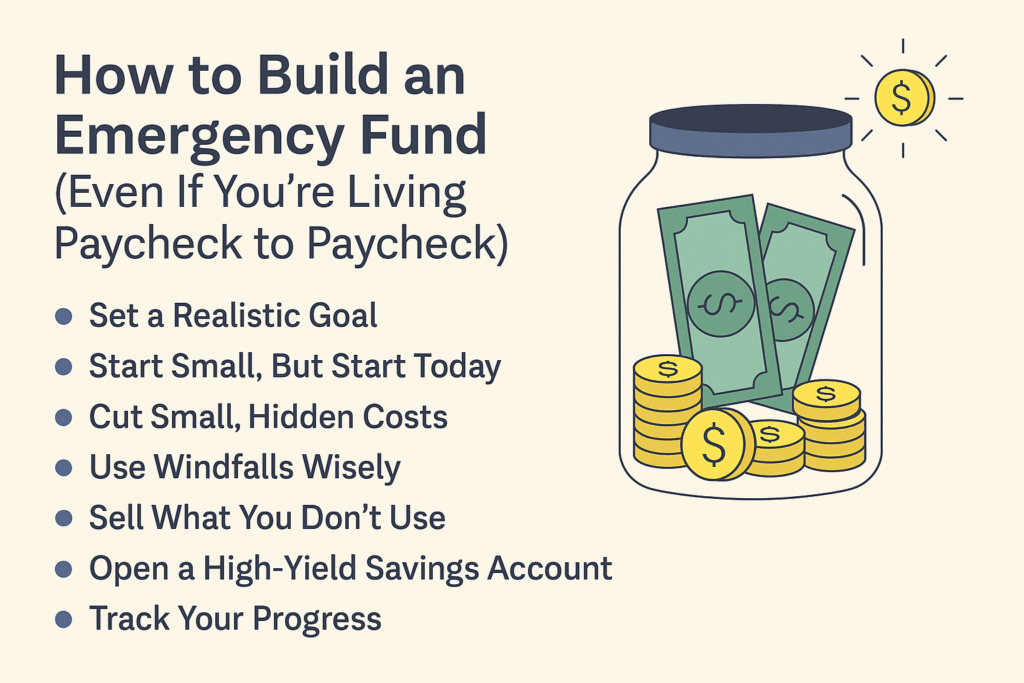
1. Set a Realistic Goal
Aim for $500 to $1,000 as your first milestone. Once reached, grow it to 3–6 months of expenses over time.
2. Start Small, But Start Today
Even $5 or $10 per week matters. The key is consistency. Use automatic transfers to move money into a separate savings account.
3. Cut Small, Hidden Costs
Cancel unused subscriptions, eat out less often, or switch to a cheaper phone plan. Redirect that money straight to your emergency fund.
4. Use Windfalls Wisely
Got a tax refund, gift, or bonus? Save a chunk of it. Treat part of it as a reward, but let the rest build your safety net.
5. Sell What You Don’t Use
Old electronics, clothes, or furniture? Sell them online and stash the proceeds in your emergency fund.
6. Open a High-Yield Savings Account
Keep your emergency fund in a separate, high-interest savings account. It’s harder to touch and earns a bit of extra money over time.
7. Track Your Progress
Use a simple spreadsheet or an app to watch your emergency fund grow. Visual progress can keep you motivated.
Conclusion
You don’t need a big income to create a safety net. Start small, stay consistent, and you’ll build financial peace of mind—one dollar at a time.