
Estimated Reading Time: 4 minutes
Introduction
You’ve probably seen websites asking, “What’s your IP address?” But what does it mean—and why does it matter? In this guide, you’ll learn what an IP address is, what types exist, and how it impacts your online experience in 2025.
1. What Is an IP Address?
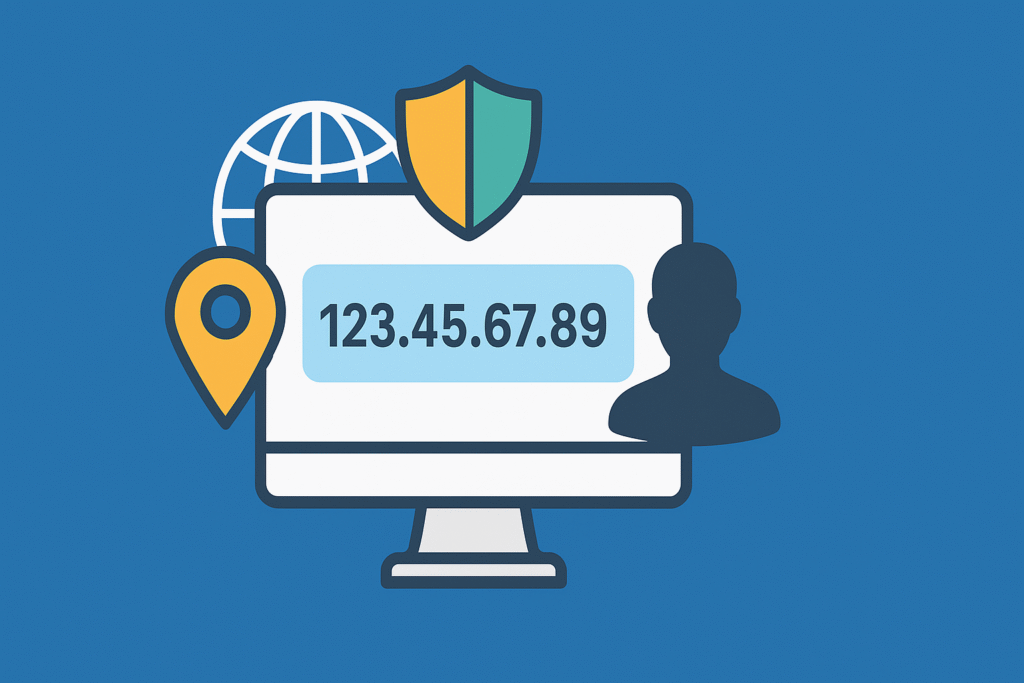
Your IP address (Internet Protocol address) is a unique number assigned to your device when it connects to the internet. It looks like this:
- IPv4:
192.168.1.1 - IPv6:
2001:0db8:85a3:0000:0000:8a2e:0370:7334
Think of it like a digital home address for your computer or phone.
2. Public vs Private IP Addresses
- Public IP: The address your internet provider assigns to you. This is visible to websites and services you connect to.
- Private IP: The address used within your local network (e.g. home Wi-Fi). These are invisible to the outside world.
3. Why Your IP Address Matters
🔒 Privacy: Websites track you using your IP. Advertisers may target your region.
🌍 Location: Your IP reveals your country, city, and even ISP.
📡 Access: Some services block or limit access based on IP regions.
⚙️ Troubleshooting: Tech support often asks for your IP to diagnose problems.
4. How to Check Your IP Address
Easy ways:
- Visit: https://whatismyipaddress.com
- Google “What is my IP” and it will display instantly
- On Windows:
Open Command Prompt → Typeipconfig - On Mac:
Go to System Preferences → Network
5. How to Hide or Change Your IP
- 🔐 Use a VPN (e.g. NordVPN, ExpressVPN)
- 🌐 Use a proxy server
- 📱 Use mobile data or a different Wi-Fi network
- ⚠️ Avoid illegal uses — masking your IP doesn’t make you invisible
Conclusion
In 2025, your IP address isn’t just a number—it’s your digital identity. Understanding it helps protect your privacy, access restricted content, and troubleshoot tech issues smarter.