
Estimated Reading Time: 5 minutes
Introduction
Most people know they should have a budget—but sticking to one? That’s the hard part. This guide will show you how to create a monthly budget that is both realistic and effective, no matter your income level.
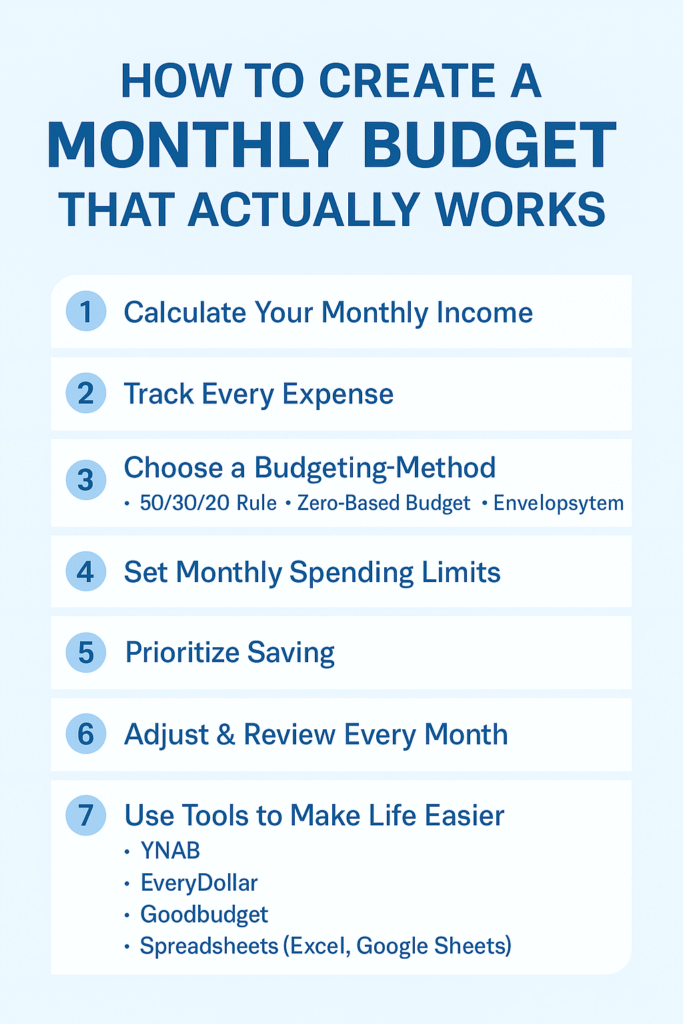
Step 1: Calculate Your Monthly Income
Start by figuring out your total take-home pay. This includes your salary, side gigs, rental income, or any reliable monthly source.
Step 2: Track Every Expense
Keep track of your spending for at least 30 days. Use apps like YNAB, Mint, or even a basic spreadsheet to categorize your expenses.
Step 3: Choose a Budgeting Method
Here are a few proven budgeting systems:
- 50/30/20 Rule
- Zero-Based Budget
- Envelope System
Pick one that matches your personality and lifestyle.
Step 4: Set Monthly Spending Limits
For each category—like food, transportation, subscriptions—set realistic caps. Be honest about your habits.
Step 5: Prioritize Saving
Include “Pay Yourself First” in your budget. This means setting aside money for savings before spending on anything else.
Step 6: Adjust & Review Every Month
A budget isn’t set in stone. Review and update it monthly based on real-life changes (like bills, raises, or debt).
Step 7: Use Tools to Make Life Easier
Helpful tools include:
- YNAB
- EveryDollar
- Goodbudget
- Spreadsheets (Excel, Google Sheets)
Conclusion
Budgeting doesn’t have to feel restrictive. With the right system and consistency, it becomes a powerful tool to take full control of your finances—and reduce stress.