
Estimated Reading Time: 5 minutes
Introduction
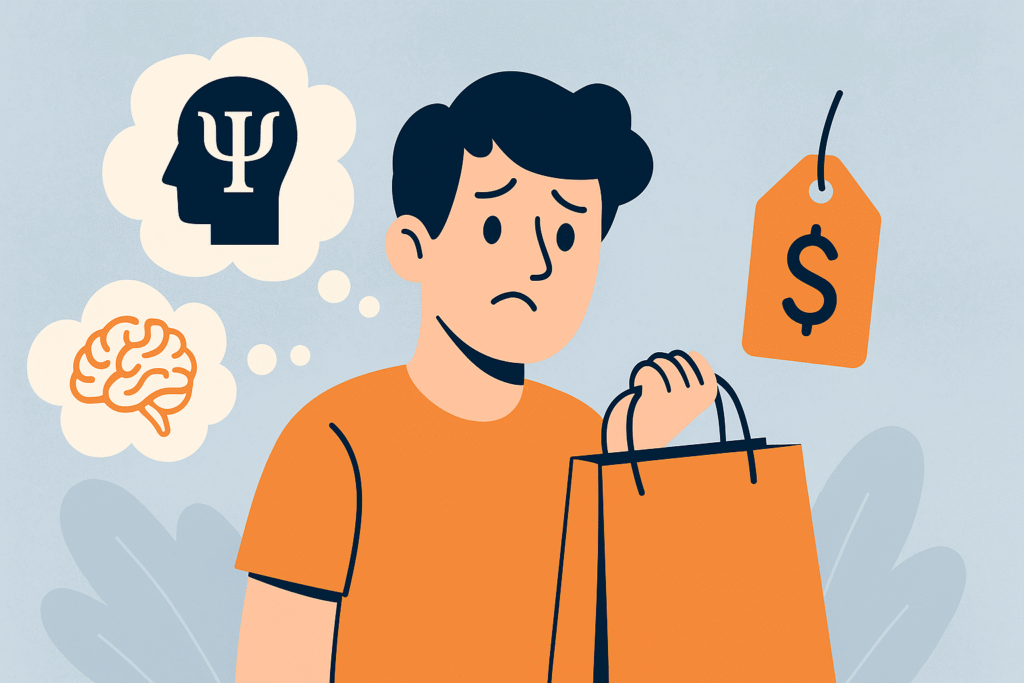
Ever bought something you didn’t need, then regretted it later? You’re not alone. Our spending habits are deeply tied to emotion, environment, and even biology. Understanding why we spend is the first step to taking back control of our finances.
1. Emotional Triggers
Stress, boredom, sadness, or celebration often lead to impulse purchases. This is known as emotional spending—when we use money to feel better.
Solution: Pause before buying. Ask: “Do I need this or am I trying to change how I feel?”
2. The Dopamine Effect
The act of shopping gives us a dopamine boost—especially online shopping. It’s like a hit of pleasure that quickly fades.
Solution: Delay non-essential purchases by 24 hours. The urge often passes.
3. Social Influence
Seeing others’ purchases on Instagram or TikTok can pressure you into spending more to “keep up.”
Solution: Curate your feed. Unfollow influencers or mute brands that tempt you to overspend.
4. Anchoring & Sale Tactics
Stores use “was $199, now $89!” pricing to anchor your expectations. You think you’re saving—but you may be spending unnecessarily.
Solution: Ignore the “original price.” Focus on actual value and need.
5. Lifestyle Creep
As income increases, so do expenses. You feel entitled to more spending—without even noticing.
Solution: Set fixed lifestyle boundaries. Increase savings rate when your income grows.
Conclusion
We don’t just spend money—we react to emotions, habits, and marketing. The more self-awareness we build, the more power we gain over our wallets. Mastering the psychology of spending is a key step toward true financial freedom.